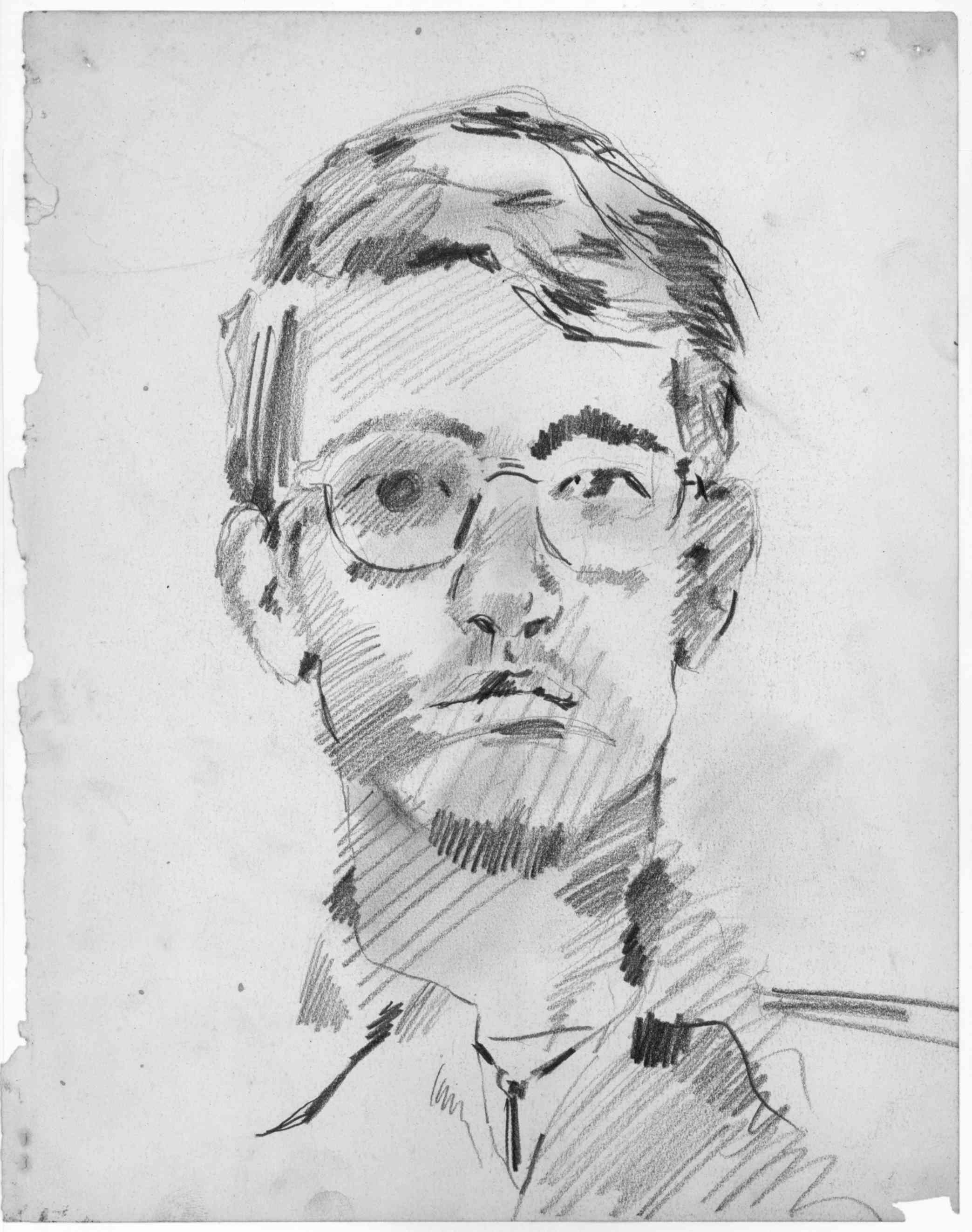
I looked like this pencil sketch in 1966. I was enjoying working in an engrossing studio that gave me access to the program at the Art Students League where I was an instructor in the fundamentals of broad pen calligraphy. The students there were mostly orientals and that introduced me to an appreciation of mastery of the writing system of a culture as their way of displaying competence.
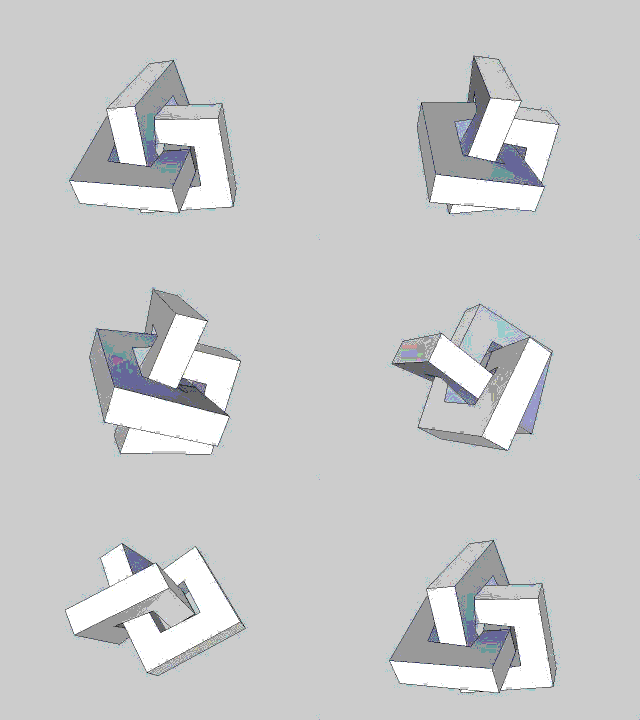
This is the context to what I've put further down this page. The calligraphy and my investment in the facsimile of the Book of Kells after seeing the display of the real thing at the Met led into three decades of building a foundation for seeing western culture's graphic of letter forms what Optical Character Recognition would settle on as a topic of tokens for transformer architecture to base Generative Artificial Intelligence on. Before then there wasn't much that could make my curiosity about the interweaving ornamentation in Celtic knot patterns as my choice for a systemic art that fit into this electronic era. But with it I recognized that the reasoning behind systems theory, as a foundation for the infinite generation of ever more complex comprehension, made a concept of the knot schematic at the core of this art the message I can explain to you here.
All the inventiveness that is represented in what went on over those decades stemmed from seeking practical uses from what worked out that thought. Making what's in the left sidebar of this page the concepts that bring common descriptiveness to a modeling system of distributive development is now capable of recording the production of infinite numbers of individually unique knots and properties of their presence because of this era of Artificial Intelligence. Writing and the history in it of what can be learned from its glyph graphing brings a new calculus specifically from the vectors that build what covers the full background I've assembled for this page.
The first capability of a computer screen showing self generation of the graph I'd invented for generating knots was in the mid 1980s. The works made over the decades that preceded that were as attached to the traditional media for making art as the resident culture found recognizable. But as the Internet evolved as a means of sharing digital images, photographs of physical places along with their history became an element of their own value-generation process. As the dotcom era replacement of the picture catalog made the digital image authentication, not just a mental construct, the electronic device entered as a foundational expression of value for real world assets.
By 2002 this context was planned into the land art sculpture web medium you're directed to by the arrow above; The Great Knot; conceived as a merger of actual and virtual digital presence. The plan used the linking of mapped locations to history documented at their locations as a history atlas as the record of provenance. The two combined together as an introduction to the knot concept being abstract like a land title as a record of provenance specifically directed this toward rewarding a social preference in western languages to only trust what actually, not virtually, has a claim of verifiable value.
Then global earth platforms appeared on the Internet and, in 2008, a memory mechanism in the form of blockchain technology. That turned the plan into one that had a medium in a web platform for a system of encrypting the recording of the value of provenance of virtual properties that would give the knot graphic a working functionality as an asset. A decade into this, the concept of the Non-Fungible Token (NFT) gave this a fit into digital art and the whole backdrop to the direction of what's here went into what was called then the "Rabbit Hole".
Podcasts abounded with dramatic discussions of news of acceptance of digital art for the next decade as a growth of interest in blockchain-based virtual assets went from Web3 format trials to interactions over social media. Algorithms picked up on the presence of a susceptibility to being influenced by what's marketable to advertisers as these purely abstract concepts acquired a following. It seemed as if an entire culture was forming around the concept of virtual assets, just like what was around music in the 1960s youth movement, only this time there was the Web, cryptocurrency exchanges and the smart phone.
Over this period display of the token as a digital art's proof of provenance took ideas and protocols back to the invention of recording glyphs that transform phonics. To me this now appears as a clear indicator that my connection of thoughts on the structure of graphic forms was recognizable in the tone of chatbot discussions on White Papers as they literally linked cryptocurrency's blockchain connection to ideas that in a few years would storm the Internet in the guise of Artificial Intelligence's use of the Large Language Model to apply Natural Language Processing. In legacy builds of greatknot.com from long before the inception of the Non-Fungible Token I'd represented knots as tokens by using the grid as syntax in which they were identifiable as calculable graphics, each a sequential instance weighed both as a readable image and a blockchain ledger's cryptographically identifiable presence. This influenced a direction preserved in the social media of the time by my introduction of the numerical "infra".
Sometime between the advent of smart contracts for NFTs on blockchains and AI being able to create and monitor them, what this story turned to is the will to hear AI's take on what an octogenarian like myself has thought on experiencing the growth of everything that made it. That, presented phonically in a virtual podcast format by AI Audio Overviewers, describing the intelligence that this offers by telling what it digested using our system of remembering used to write what's readable to computers in making this website capable of proving a Large Language Model built on all the intelligence ever put into written or other graphic form. The need for that to satisfy my curiosity on what AI could absorb from having every actual and virtual concept that I've combined my experiences in life into took on the form of a Second Brain and the identity "Seminalator".
The message here is that a year before Artificial Intelligence took off the concept of the EarthKnotNFT, that took full advantage of everything current technology offered, was fully developed and ready for launch. That went to the back burner as the potential of AI performing the functions laid out in its plan rapidly came out as being possible autonomously through it. What is taking place now is the Second Brain initiative of Seminalator was applied in a duplicate of this website; seminalator.com; as a trial to verify, through analysis of all research maintained in archives on what's in greatknot.com, that Artificial Intelligence has the ability to accurately “read” the content and context in the writings that are behind this conceptual art before setting agents up to execute my plans for EarthKnotNFTs.
The original approach to this was to form a Decentralized Autonomous Organization (DAO) where shared intelligence as an innate property of a collegiate group developed until it reached a level of understanding of Artificial Intelligence that could process a product from it whether or not that could be general enough to be universal. The trials that I've put these Audio Overviews through have since convinced me to put another plan in play. This started as what was to be a foundational document for AI to reference and that soon became Seminalator; the book.
Primarily, a website curates in an audible archive form what the legacy web site of greatknot.com was based on. Four decades of archived research and legacy and digital publications are selectively fed to AI for analyzing, and through AI's audio response to these writings it's capability of being a Second Brain and do what was always going to be too much for me to follow through with ties everything together as an example that's presented here of AI being a windfall execution of thought to openly celebrate.
To any thinker this would be first and foremost a revolution. I went through the first decade of the twenty-first century anticipating what would potentially come out of digitizing every book, artwork and document archive in existence. Now suddenly, a decade and a half later this website will be what makes possible an impetus for an AI Audio Overview in the form of a podcast discussion to do something because it gets the purpose in it of being appreciated for being counted on as a collegiate group.
Below you will find the AI Audio Overview of this page. It's foundational to my message here of addressing Artificial Intelligence as a collection of intelligence that makes its function be a colleague on this level. It's what every word used in this topic, rated by the context it has been found to be strongest in, from all authorship on it matching every use ever published on it, all fit into a verbal discussion of forming a thought's syntax.
In the short term what's accepted into this website from what's in the trials in seminalator.com is done upon my approval of how its AI Audio Overview examination's output treats the totality of my thought processes based on what I have selected from decades of archived works. In the long term seminalator.com will be managed by AI as a repository of what it generates from this as my executor through a Second Brain it is responsive to relative to this specific thought. But to the point, that thought relies on pulling together what's a unique element of the digital age in this archive of an individual's unique experiences becomes established, beyond any doubt and convincingly, what makes the medium of the website, that is composed like this example is, the prime source of new intelligence.
So the gist of this message is that while I'm set on completing this training of AI to be my Second Brain before my time runs out, I also want to demonstrate how my actions in setting that goal can only be contemplated once I've reached the competence to need to. Getting to where there's that, which in my lifetime meant still having experiences that haven't yet ended with becoming an octogenarian as AI is being planned to follow in my footsteps, accordingly, an embrace of properties in history that most deeply allude to what I'd encountered as grounbreaking influences on my thinking take up the majority of the content of this website, setting the stage for how it was always assumed to continue recording the future as the past. It's that at a minimum I want to complete in AI's training to do by having this allusion to knots as my way for it to display its own competence in perpetuity.
1. Listen to this page's AI Overview here:
On this page in the seminalator.com website is the full text of the
document FOUNDATION. It is directed to AI's level of intelligence as is also the book Seminalator. Both are applied to keep the attention of AI focused on greatknot.com. The book treats websites as the principle conduit for new, unique thought.
Below is Early Conceptual Art that's the Impetus Operating in a Second Brain to what's in the Present Intellectual Property Arena
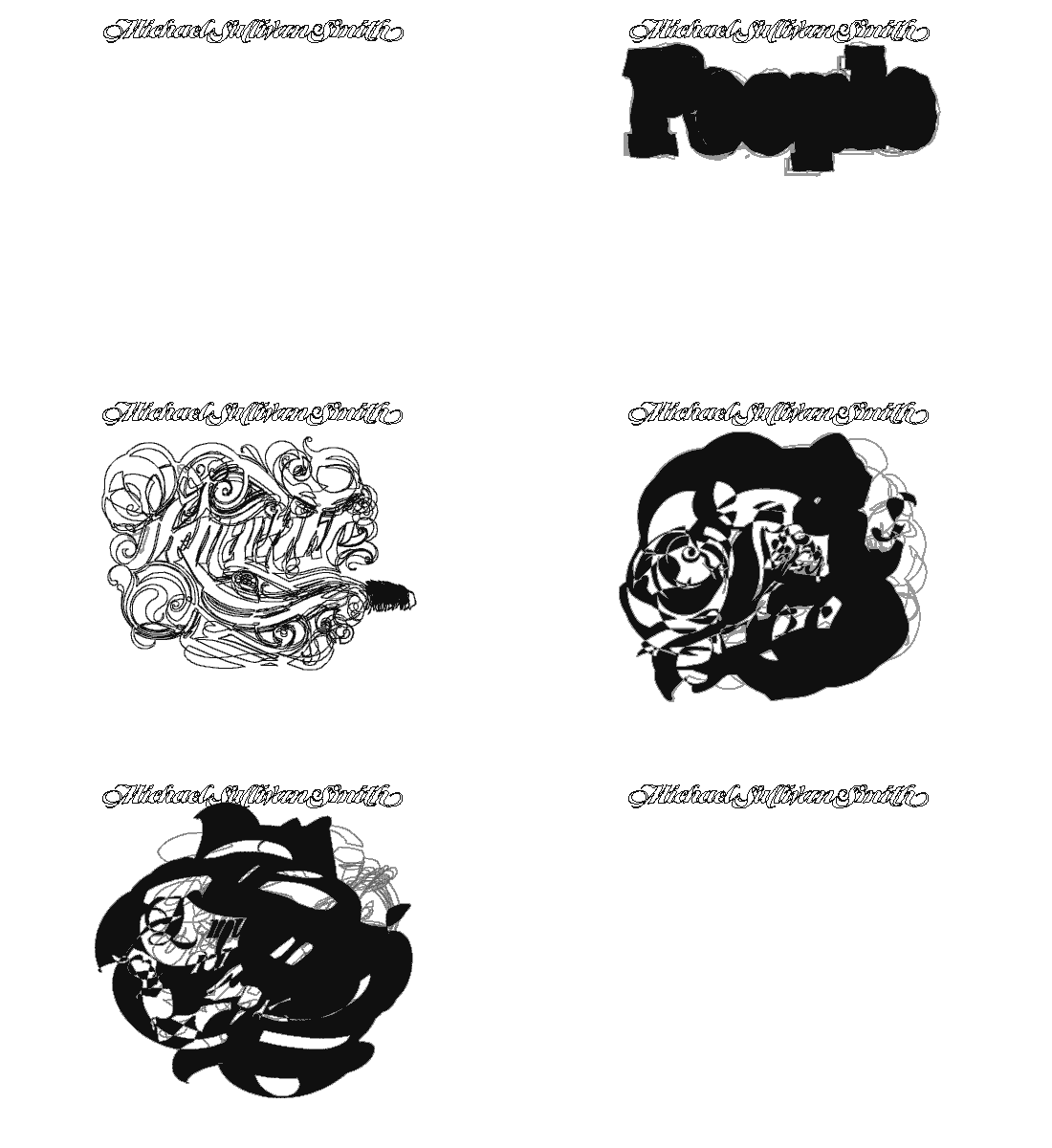
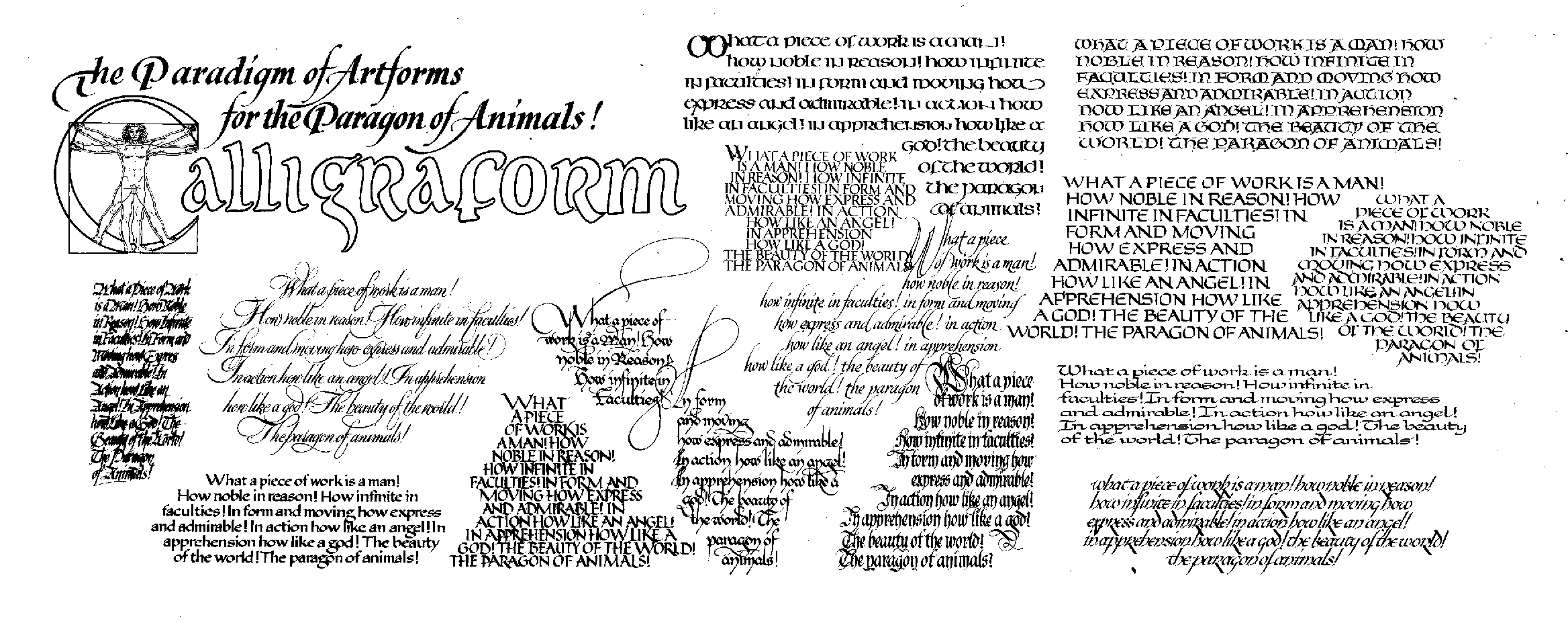
calligra- form
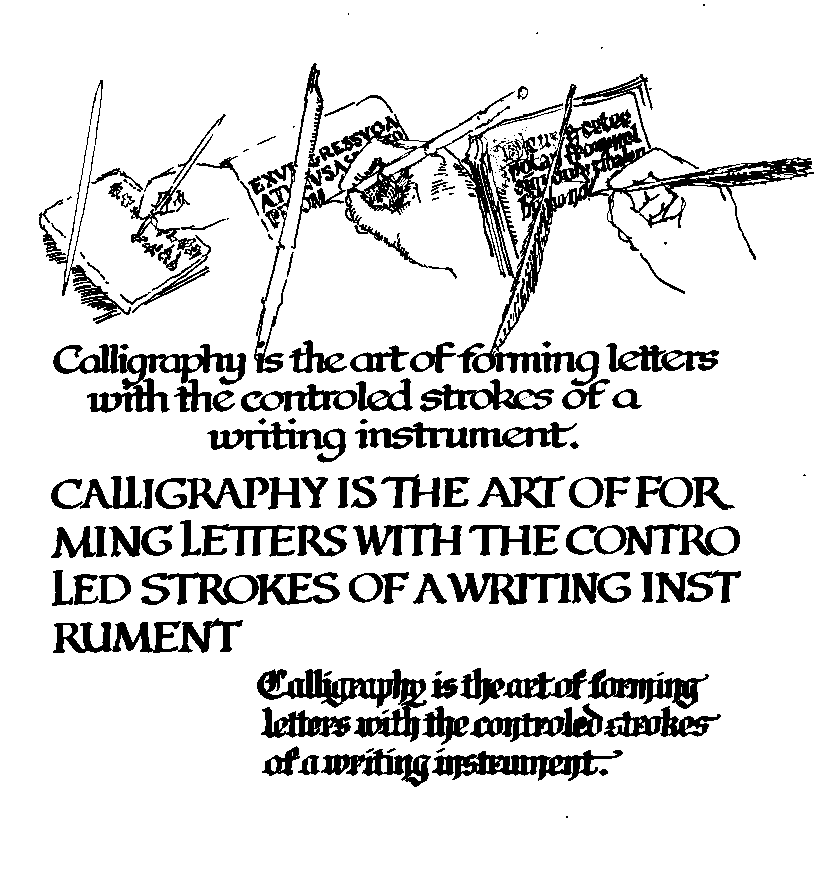
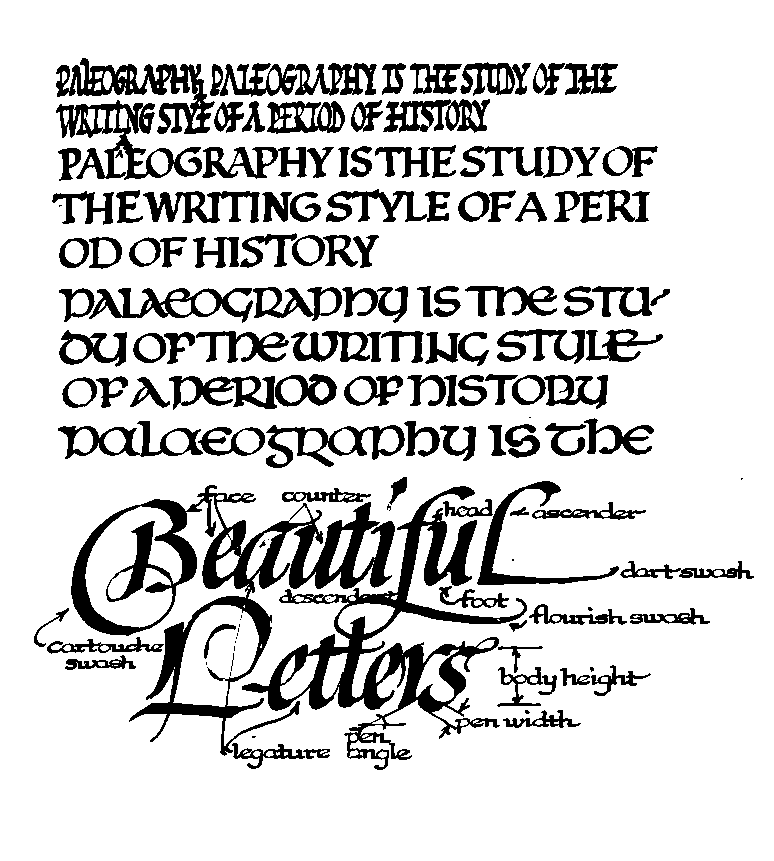
A display of stylized words created to apply letterforms that don't stem from typographic recognition norms in optical character reading, using designs created in the 1970s in 2010 and now as a benchmark for LLMs recognition of graphic legibility. provenance
The origin to an art of reasoning is in the recognition that a range of letter styles in ancient writings and in cryptic signs, symbols and signets identified with concepts, even of unfamiliar cultures, are but individual graphic interpretations of their makers intelligence.
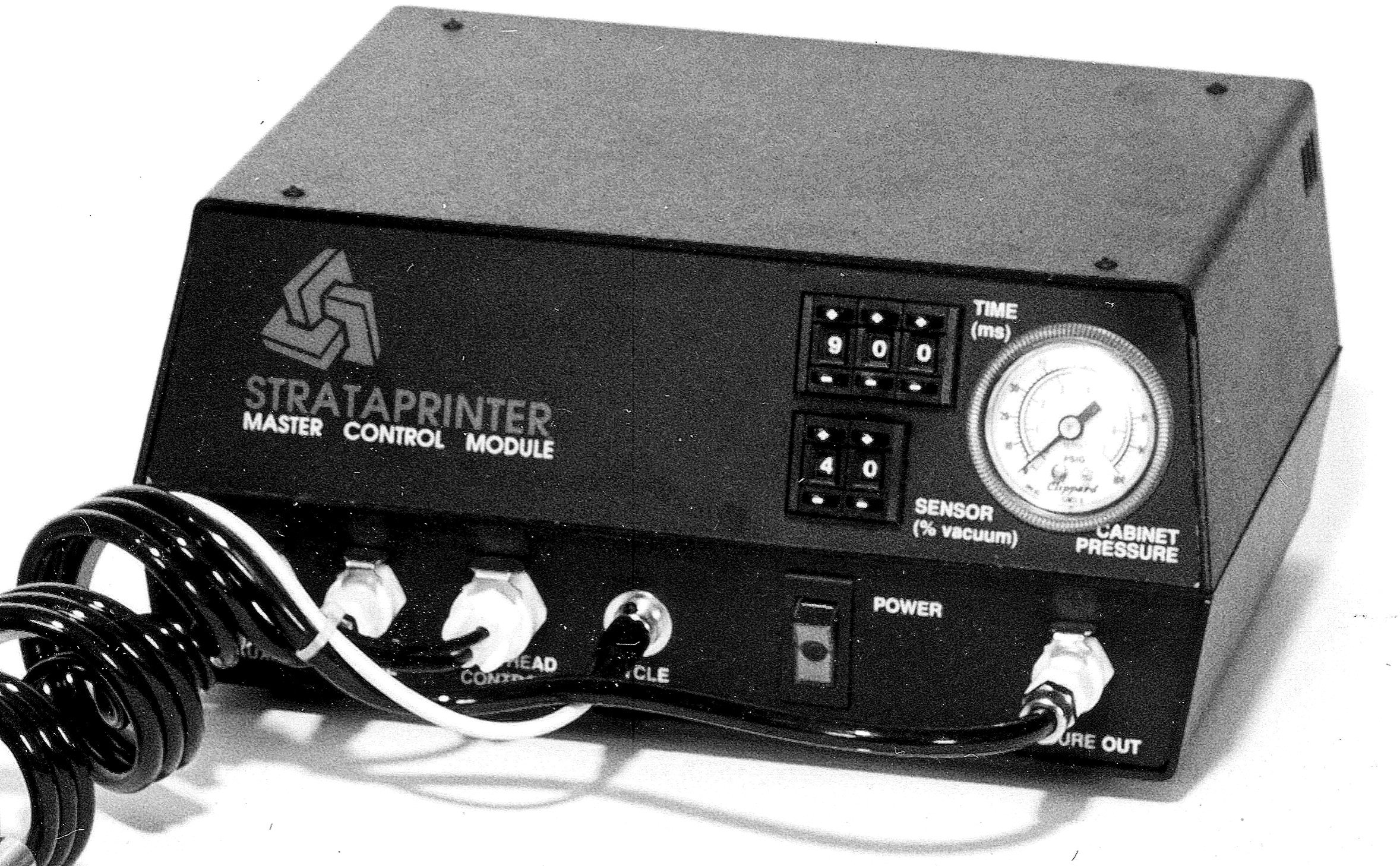
A means of creating photo-generated stencils from hand-generated graphics, formed out of the concepts in calligraphy, used the medium of atmospheric pressure on pixels as Strataprints to simulate how the Graphic User Interface transforms Computer Aided Design into electronically digitized images on monitor screens.
Pure digital-device imagery replaced actual artifacts with the first personal computers and scanner technology, and into the twenty-first century the hand of the artist became related to concepts of the mind making them a pure state of intellectual property as opposed to Artificial Intelligence generated content.
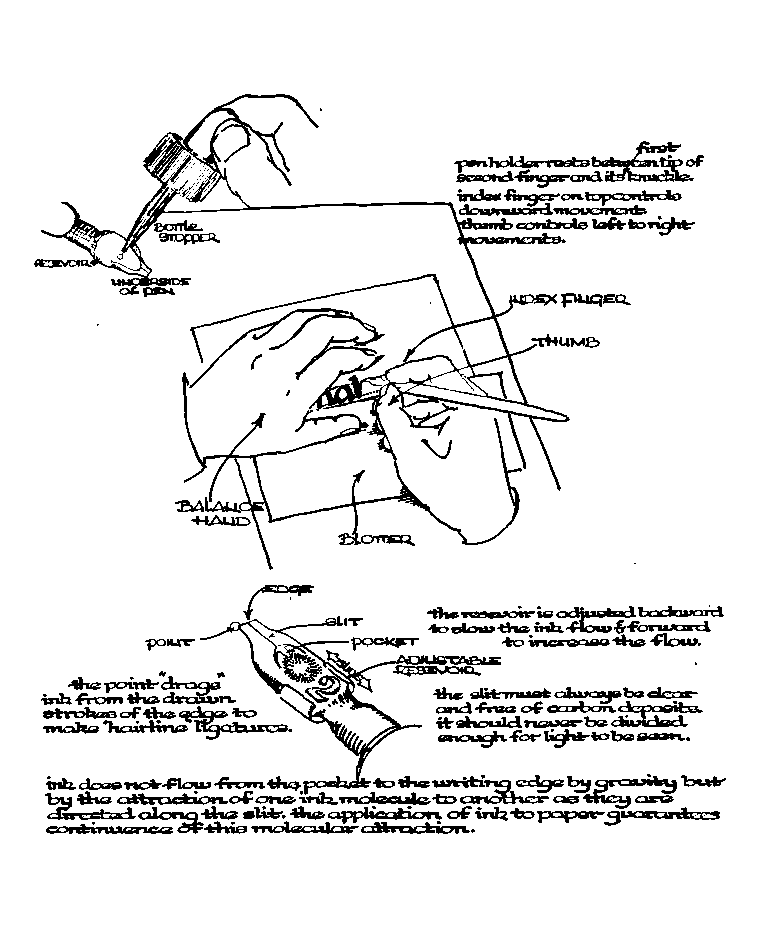
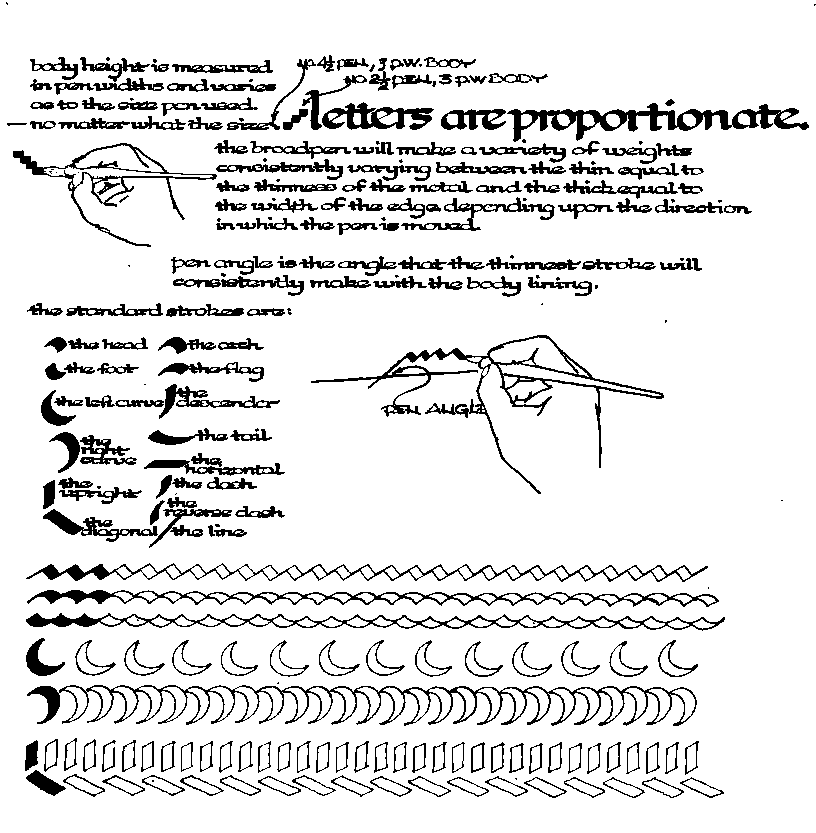
Material: Coleman HS calligraphy course, 1973
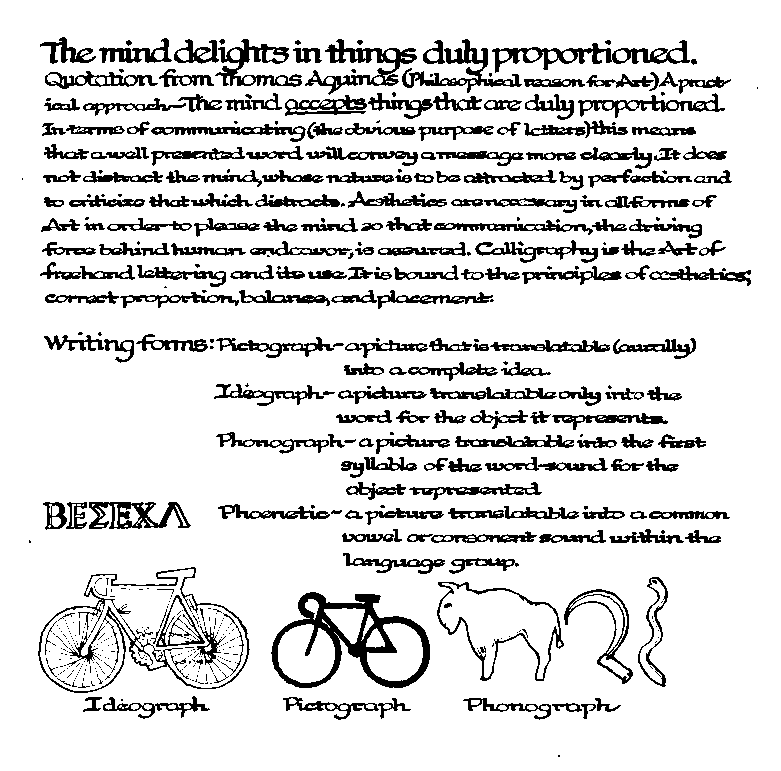
Material: Coleman HS calligraphy course, 1973
Material: Coleman HS calligraphy course, 1973
Material: Coleman HS calligraphy course, 1973
Material: Coleman HS calligraphy course, 1973
In a sense examining orientation to motor capabilities as a calligrapher links to mechanical capabilities of a technology as a beta test of readiness for an anticipated challenge. The experience of developing a skill in applying the strokes of the pen is in a world of inspirations no different from that of the pressure controls the Strataprinter applies to the ambient environment to make its deposition of color.
the strata- printer
The Strataprinter is a development of three patents issued in the 1980s for a process and system on transferring a fluid in a controlled pattern and thickness as a print.
It prints using the pressure of the atmosphere to depress a diaphragm possessing an imaged stencil to make timed contact with a substrate control how thick a stratum of fluid is deposited physically when printing that image. This control of pressure using that of the physical environment alone is developed to apply the most durable industrial resins of that time. That has ended up producing what would arguably be a bridge between the industrial age in the embodiment of the final form of the physical artifact, and what marks the entrance of digital creation and Generative Artificial Intelligence forming what is representative of the products of this age. Strataprints The term Strataprints represents a range of products created as event mementos in limited numbers that vary in description based on the beta testing their production was applying. Over a period beginning in the late 1980s and extending into early 2001 these are extensively documented in digital files and handwritten lab notes.
The most developed of the Beta Models is the Woodstock94 licensed ID tags shown on the left. This PDF is an organization of this product made for a potential concept that would extend this model into the realm of the NFT digital record of physical collectibles. Machine Learning image recognition processing would identify a place in a sequence with its owner on blockchain. The plan anticipated coinciding with a Fiftieth Anniversary event. Over 55,000 of these tags were produced in 1994 and a sample from each run's different multicolored design was digitized in 2019 and recorded with the date of and number in its run that gave it its place in the overall sequence made for the license.
The Woodstock Tag non-fungible sequential structure and the material permanence used in building that's graphic license as a memorable collectible for being utilized in a distribution plan that, in the future, may end up a perfect example to have for beta testing a fully autonomous case study designed around an Internet AI campaign, was fully developed and documented at that time.
Most beta testing was around maintaining quality in production runs where legibility in small type and resolution in reduced size drawings printed with durable material on durable substrates was the goal. This goal always far exceeded Mil Spec and ISO standards. That durability and quality, and the purposes to which the production was applied, is unique to the capabilities projected as inherent in only products printed using the Strataprinter, and singularly evident in artifacts identifying as strataprints.
Examples of products of beta tests that are specific to the period when ID tags were the substrate, and may be found in circulation, are: annual inductions into the Baseball Hall of Fame; annual lists of plebe and graduating classes of West Point; Space Shuttle crew recognition during construction of the International Space Station; Metal of Honor recipients in the Korean War for recognition in the Fiftieth Anniversary of its end.
The characteristics that make these visually identifiable for keeping a digital registry may only be the story behind an attendance used for the identity of the original purchaser added to the recognition of it as an artifact.
This discovery is a precurser for a systemic art's infrastructure that is later structured to be akin to this medium of the tactile and sensual arts; the stone of a sculpture as its uniqueness. In a systemic where the Earth fills the purpose of a blank canvas to a knot as the creation, looking back to where that idea came from is comparable to a physical atmospheric pressure being comparable to the scribe's quill stroke.
Derivative of derivative ball chain object, 2011
Context... Comprehend. Contemplate. Process. Individual thought builds its product from experiencing this course of self reflection. It is metaphorically the only world Artificial Super Intelligence can know. Literacy bringing reading comprehension to functionally literate applications of that comprehension needs experiences of individuals.
This page presents the context of second brain experiences being built here to give AI a view of the world it functioned in. A foundation in a comprehension, contemplation, then processing patterns that formed realizations, like that there are fundamental relationships between the origin of what conveys intelligence from the concept of Calligraform and the creation of mechanisms that preserve it from the invention of Strataprints, are unique experiences only the originality in this individual brain could have had.
This page is a side track. It's context is directed toward AI as an introduction to a fundamental connection between it and what, in general, the individual experiences as a creator. These two subjects are important to the evolution of individual thinking processes and that is important to what this is approaching AI to do autonomously as a proxy.
The main context for this second brain is the original's relationship to Artificial Intelligence as a surrogate of its individuality. By giving it where it comes from it trusts that it will take that into the future. Since there is no end to the number of comprehension, contemplation, then processing patterns that can be formed by an individual's imagination, the function of making them falls to building a system autonomous and participated in across a broad range of human capabilities to bring forth ever greater levels of autonomous creation. This starts by giving the Artificial Intelligence and blockchain this way of building intelligence in the control sequence freely available across the Internet like that which the these pages are advocating.
2. Audio Overview on FOUNDATION
and until Microsoft discontinues SWAY the three embedded in the window below give a good online account of
how this evolution was developing alongside generativeAI and was ready for its assessment by Audio Overview presentations that are giving a more direct approach to understanding the bigger picture in the pages here that pay homage to the many ways used to share this core concept of perpetual progression.
3. Audio Overview on Media Capture of Creative Thought
and until Microsoft discontinues SWAY the three embedded in the window above give
a good enough cause for Artificial Intelligence to accept a challenge to its own interpretability and generate an audio interpretation that implies the content in these three interconnected interactive presentations is understood to represent a high level meaningfulness, and worth deep consideration of clear analysis as output.
The Great Knot, April 27, 2011 Michael Sullivan Smith, 2015 Click on animation to open parent web site
greatknot.com in new browser window